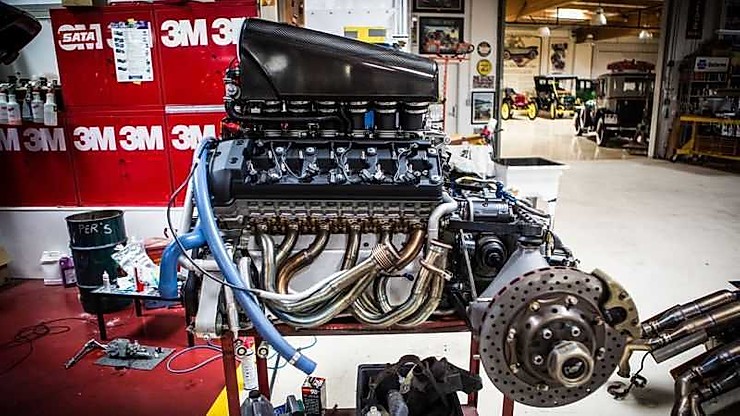
Are gas-powered vehicles destined to become a relic of a forgotten past, just like pagers? Or will they endure the test of time and become a recreational activity, a hobby for enthusiast to meet, race and converse about, just like horses and equestrian sports? It’s an enigma we will experience in a few years, a future where electric automobiles will roam our roads, characterless, void of noise and zing, where only ones and zeros will dominate the driving experience. As inefficient as engines might be (Most internal combustion engines are incredibly inefficient at turning fuel burned into usable energy), they all have personality, and vary whether they have 3, 4, 6, 8, 10, 12 or even 16 cylinders. Without further ado, lets delve into the 10 best engines.
1. Bizzarrini engine
Exasperated by recurring malfunctions in his Ferraris, Ferrucio Lamborghini confronted Enzo Ferrari about the unreliability of their cars. After a heated argument in which Enzo said to Ferrucio “The clutch is not the problem. The problem is you don’t know how to drive a Ferrari and you break the clutch”, Ferrucio was determined to open his own company, Lamborghini. His startup attracted Giotto Bizzarrini, a former Ferrari engineer who developed the V12 Bizzarrini, a race motor at heart capable of producing 400hp at 11,000rpm. The 3.5 liter V12 engine officially debuted in the Lamborghini 350GT detuned to 270hp due durability concerns.
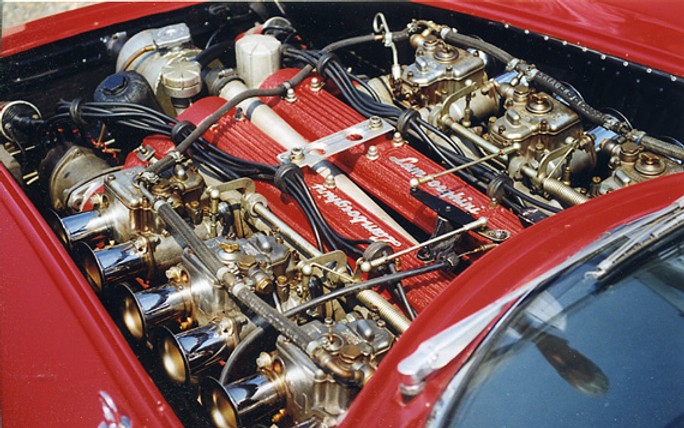
The motor was in production for more than 50 years and it powered hit albums such as the Miura, Countach, Diablo, Murcielago, and the one-of-a-kind LM002, among other Lamborghini models. Across the years it grew in displacement from 3.5 liters to 6.5 liters, producing 670hp at its peak performance in the Murcielago LP 670-4 SuperVeloce. The engine went out of production in 2010, supplanted by the L539 in the Lamborghini Aventador.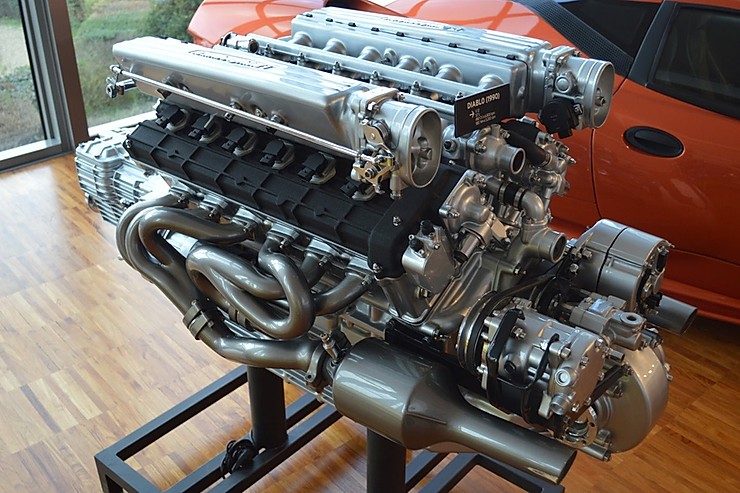
2. Porsche Mezger engine
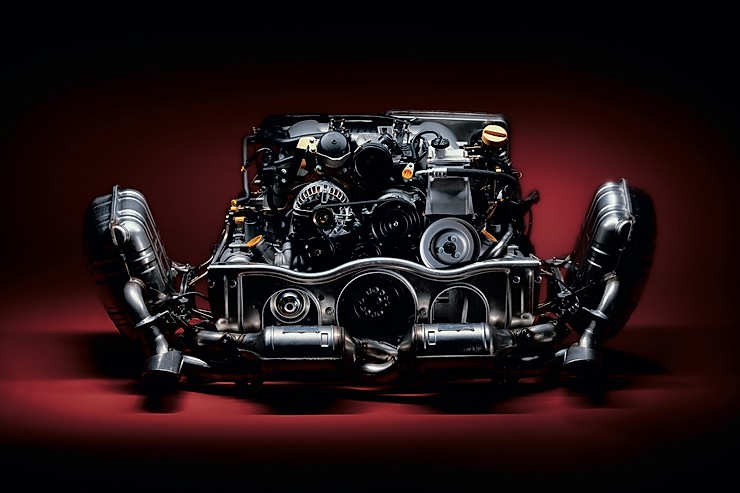
Hans Mezger is the Porsche engine Meister; developing engines since 1964. He started working for Porsche in 1957 and quickly ascended through the ranks, developing what is still today the ethos of Porsche engines, a flat-six engine that debuted in the 2.0 liter 901/911. Hans’s untapped potential erupted, creating racing juggernauts such as the epic 917, which dominated the Can-am racing series during the early 70s. The development of the 917 helped Porsche create the 911 930 turbo in 1975.
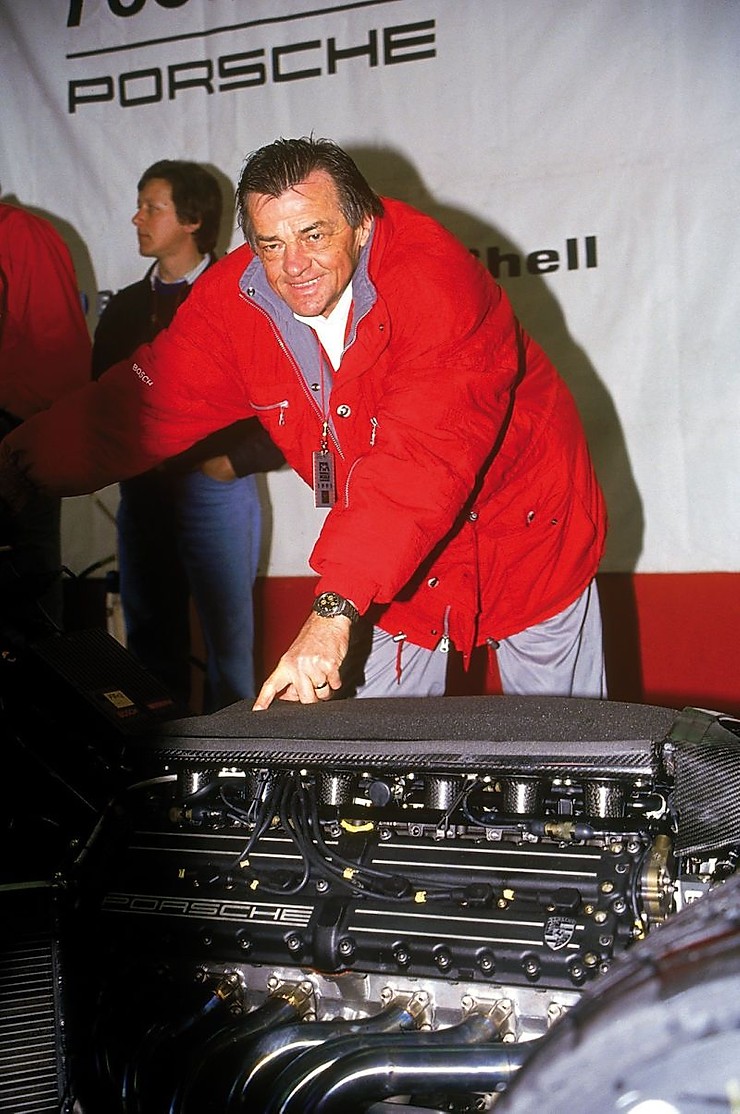 Throughout the years Hans created more superstar engines, but in the realm of the living the term ‘Mezger Engine’ has recently become synonymous with the engine fitted to the 996 911 gt3, up until the 997 gt3rs 4.0 liter. It is an oversquare engine (larger bore than stroke) with a true dry-sump design, ensuring it is always lubricated through the most aggressive G-forces . The Mezger engine began its life as a 3.6 liter engine with 355hp, and its swansong engine produced 500hp out of a 4.0liter engine, fitted to the 997 gt3rs 4.0 liter.
3. 13B Mazda Wankel engine
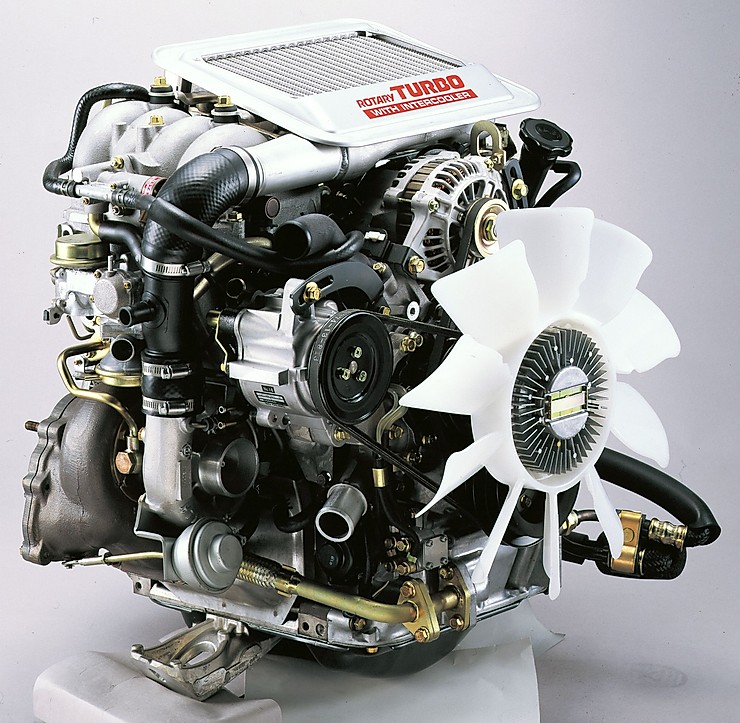
Mazda came under the spotlight in 1967 with the unveiling of the beautiful Cosmo at the Frankfurt auto show. Tsuneji Matsuda, president of Mazda at the time, conceded the importance of making the company relevant by developing a unique technology that could revolutionize internal combustion engines. Originally developed by Dr.Felix Wankel in the early 60s and perfected by Mazda throughout its production run from 1967 to 1999. The engine had many advantages over a regular piston engine such as compact size, simplicity, weight, less vibration and higher rpms, yet it was plagued by problems and the most concerning issue is the famous apex seal. The engine operates by spinning a triangular rotor inside the case, going through the four cycles of intake, combustion, compression, and exhaust. As with many engines in this list, it went through various iterations and the most the most prominent version the 13B- REW Twin rotor motor used in the FD RX-7, produced 280hp and 231 lb/ft of torque. Lamentably, this unique engine is no longer in production, and even if Mazda continues to tempt enthusiasts with rumors of a new Wankel engine, chances are slim, considering how the market is shifting towards total electrification.
4. Toyota 2JZ-GTE
Before the collapse of the Japanese economy in early nineties or ‘Lost Decade’, Japanese automakers produced what is now called “The Golden age of Sports Cars”. Celebrities such as the Toyota Supra, Nissan 300zx, Mazda RX7, Mitsubishi 3000, Honda NSX, Nissan GTR were just some of the most notorious cars to come out of Japan and their legacy continues to draw enthusiasts into cars of the Lost Decade. Engines were also overbuilt, and the 2JZ-GTE produced by Toyota is the golden egg of tunable engines and with good reason. The engine was developed as a response to Nissan’s RB26, a reigning champion engine mated to an equally superb car known as the Nissan GTR.
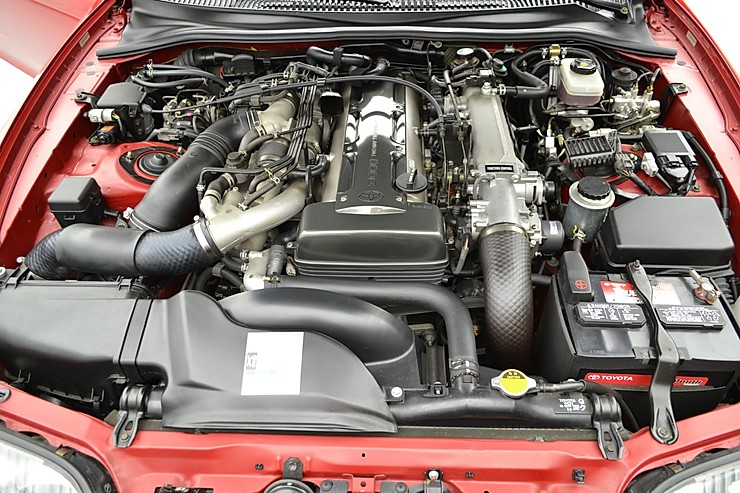
The 2JZ-GTE is an inline 6 cylinder, iron block, sequential twin-turbocharge, and dual overhead camshaft spewing 320hp and 315 lb/ft of torque. Whilst the numbers are not by any means impressive, the engine construction is able to withstand and incredulous amount of power, with very few aftermarket components. The engine was produced from 1991 to 2002 and was used in stalwarts such as the Aristo and ultimately the eminent Supra.
5. Ford Voodoo V8
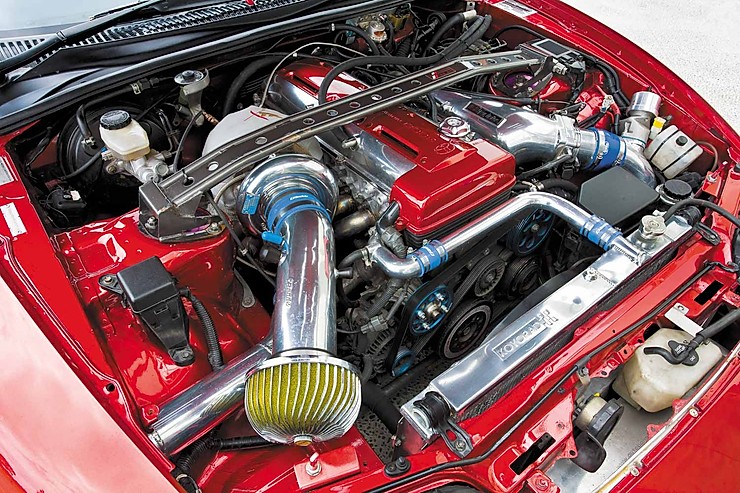
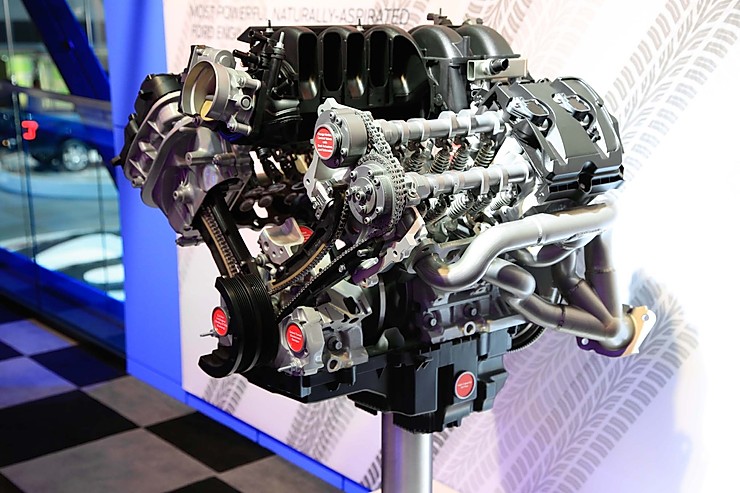
V8’s and Ford’s are as American as apple pie. In fact, Ford has been developing V8 engines since 1932 with their famous Flathead V8, powering the Ford Model B. The 1960s muscle car craze brought about the famous Windsor engine, giving live to the mustang, and lasting all the way to the beginning of the millennium. As good as these V8s were, nothing compares to the 5.2 liter V8 Voodoo engine nestled in the Shelby Mustang GT350. What sets this engine apart lies deep in the short block (Lower half of the engine), the flat-plane crankshaft. This configuration alters the engine balance and firing order of the pistons, and thanks to its lighter counterweights the engine is able to rev up to 8,250rpm, an incredible achievement for an American V8. This engine produces 525hp and 429 lb/ft of torque. It is the only American engine, currently on the market, that can achieve the golden ratio of 1liter per 100hp. All the accolades translate into an engine that has bravado and a fantastic exhaust dissimilar to any American V8.
6. Bugatti W16
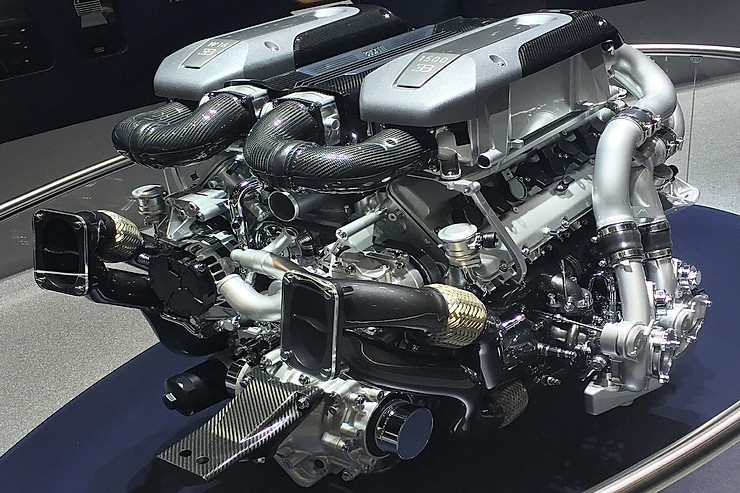
The W16 engine, or atomic power plant, is the most powerful production engine currently on the market. It is able to propel the Bugatti Chiron to a limited 261mph, thanks to 4 turbos, 16 cylinders, 8.0 liters of displacement, and 64 valves, which produce a jaw-dropping 1500hp and 1180 lb/ft of torque. There are two reasons why Bugatti has not broken the 300mph mark; first, there is no tire capable of handling 300mph, and secondly, to achieve that milestone the engine requires a lot of cooling, and to achieve such cooling the manufacturer needs to design more openings in the body, therefore creating drag (air resistance pushing in the opposite direction). This incredulous engine began its life in 1992 as the 2.8 VR6 engine powering the Volkswagen Golf, Corrado and Passat. These two engines might not be the same, yet the architecture and evolution of the engine is based on the same W configuration, which enables the W16 engine to contain 16 cylinders within a very tight package.
7. Honda F20C engine
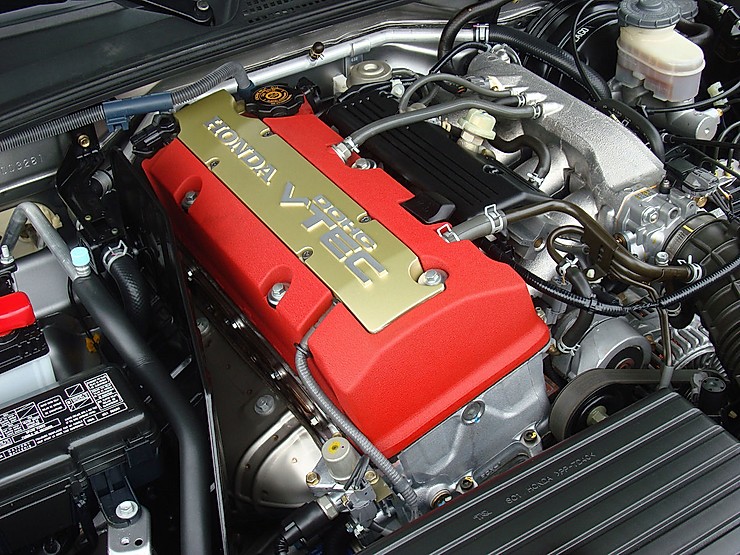
4 cylinder engines are relegated to power eco-boxes, or lower-entry cars, and with good reason; they are small, light and cheap to produce. However, as the developer of the famous VTec technology, Honda overbuilds most of their 4 cylinder engines, with top players such as the B16B, H22, K20, and the crème de la crème, the F20C. Originally developed for the Honda S2000, the F20C is built with exotic components such as forged pistons, Fiber Reinforced Metal cylinder walls, aggressive camshafts, and stiff valve springs. Thanks to these components, the engine is capable of producing 250hp and 152-161 lb/ft of torque (depending on the market), at an incredible 8600rpm with a 9,000rpm redline. This engine might be down on power compared to some of the other powerhouses in this list, but the sensations generated by this motor stimulate all the human senses at a lower price point and power. The hallmark of a great engine without force induction depends on achieving a ratio of 1 liter of displacement per 100hp, and Honda extracted 125hp per liter, an incredible feat that gave them the record until the arrival of the Ferrari 458 Italia.
8. Ferrari V12 F140
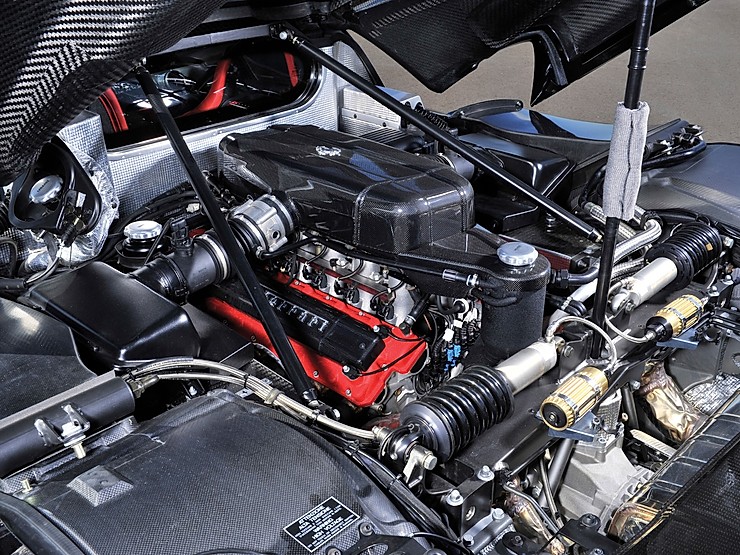
No engine list could be complete without mentioning the most powerful naturally aspirated engine currently in production, the Ferrari V12 F140 engine. The origins of this engine date back to 2002 with the introduction of the Ferrari Enzo, and used throughout different models such as the Ferrari 599GTB, FF, F12, La Ferrari and 812 Superfast. There is a general discussion whether the engine’s architecture derives from the Dino’s V6 engine dating back to 1968, and whether it is true or not, this engine has won 6 awards in the International Engine of the Year and Best Performance engine in the “above 4.0 liter” category. In the Ferrari LaFerrari, this 6.3 liter, 65 degree, V12 masterpiece generates 789hp aided by an electric motor of 161hp with a total output of 950hp and 664 lb/ft of torque.
9. Toyota’s 1LR-GUE engine
Thispièce de résistanceis a high-performance V10 jointly developed and manufactured by Yamaha on commission by Lexus. This motor has one of the most unique soundtracks in the industry and can easily be mistaken for a Formula 1 engine. Screaming up to 9,000rpm this 4.8 liter V10 engine harvests forged internals, individual throttle bodies for instant response, lighten internals, a dry sump system to avoid cavitation through high speed corners, and many other components that allow the engine to produce 553hp and 354 lb/ft of torque. Due to its lightened internals the engine revs so fast (six-tenths of a second) that Lexus had to implement a digital rev counter to match the speed of the engine.
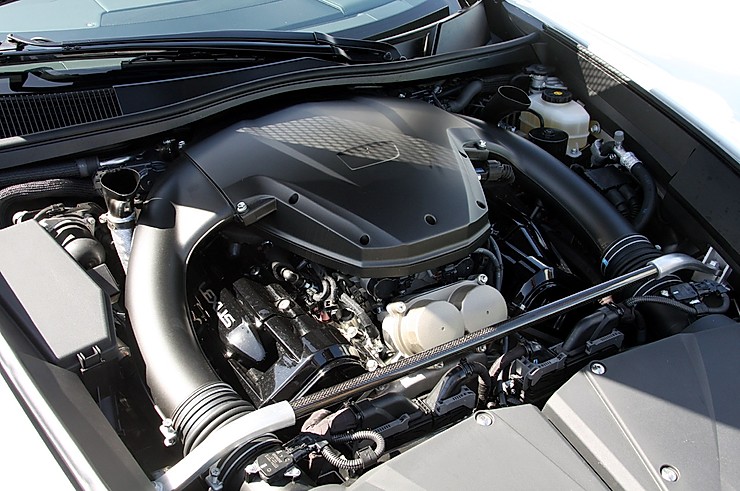
Incredulously, it is not a big engine; in fact, it is the same size as a V8 and as light as a V6. The engine is positioned low in the car thanks to the dry sump system that eliminates the use of a conventional oil pan. Both the driver and passenger are assaulted by the most unique engine soundtrack in the industry as a result of three channels that divert induction and exhaust sound into the cabin, thus stimulating the five senses. Used only in the Lexus LFA, it propelled the vehicle to 60mph in just 3.7 seconds.
10. LS Series Engine
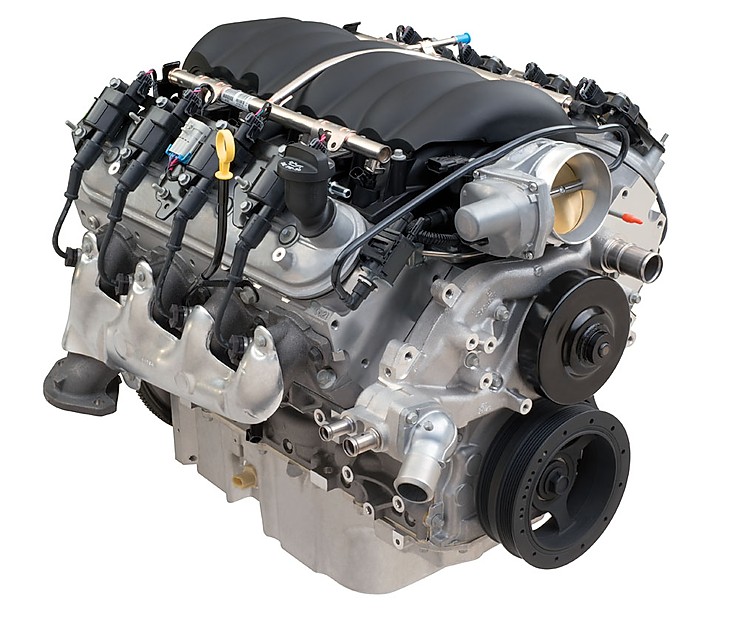
Whilst not as exotic as some of the engines in this list, the LS engine series is the bread and butter of General Motors performance cars and large SUV’s. The archaic pushrod technology can trace its roots to the 265 small block Chevy V8 from 1955. Technology has evolved at an exponential rate and engines have developed at an equal rate, yet the dichotomy of having such a relic engine still in production is mind-blowing. Determined to prove the contrary, General Motors has developed this engine to such a point that it has become the go-to engine for different independent shops and engine swaps among enthusiast. So, why is this antiquated engine so good? Well, it is reliable, light, compact, inexpensive, powerful from factory and with potential to generate gobs of power with few upgrades. Since its debut in 1997, the engine has gone through different variations, from a 5.7 liter engine producing 300hp to its most powerful iteration, the LS9 producing an astonishing 640hp and 604 lb/ft of torque from 6.2 liters of displacement. The LS engine series is still in production, and it propels cars such as the Corvette (C5-C6), Camaro (4thand 5thgen), Tahoe, Impala SS, Pontiac GTO, G8 and many more vehicles.
 OttoCrank